Unleash your creativity in the Roblox metaverse by mastering the art of making custom decals. This comprehensive guide navigates the entire process from conceptualization to successful upload ensuring your unique designs enhance your games and avatar. Discover vital tips and tricks for optimizing image quality understanding Roblox's moderation policies and troubleshooting common issues. Learn how to leverage free design software to create stunning visuals and effectively manage your decal assets within Roblox Studio. Stay ahead of 2026 trends by making professional quality decals that captivate players and personalize your experience. This essential resource provides all the information you need to become a skilled Roblox decal creator transforming your creative visions into digital realities. Whether you are a beginner or looking to refine your skills this article offers invaluable insights to elevate your Roblox decal game.
{ "title": "make roblox decals FAQ 2026 - 50+ Most Asked Questions Answered (Tips, Trick, Guide, How to, Bugs, Builds, Endgame)", "introduction": "Welcome, fellow creators, to the ultimate living FAQ for making Roblox decals, updated specifically for 2026! The world of Roblox asset creation is constantly evolving, and staying ahead of the curve is crucial for your projects to truly shine. Whether you are aiming to personalize your avatar, enhance your game's aesthetics, or develop complex UI elements, mastering decals is a fundamental skill. This comprehensive guide addresses the most pressing questions, common challenges, and exciting new opportunities in decal creation. We've gathered insights, tips, tricks, and solutions to ensure your journey is smooth and your creations are stunning. Prepare to unlock your full creative potential and make your mark on the metaverse like never before!", "sections": [ { "heading": "Beginner Questions & Core Concepts
", "q_and_a": [ { "question": "What exactly is a Roblox decal and how is it used?
", "answer": "A Roblox decal is an image asset uploaded to the platform, serving as a texture that can be applied to surfaces within games or on avatar items. It allows creators to add custom graphics, logos, and intricate details to their builds. Decals are crucial for visual storytelling and unique game branding." }, { "question": "Is it free to upload decals on Roblox in 2026?
", "answer": "Yes, in 2026, uploading images as decals to Roblox remains free for all users, regardless of whether you have a Premium subscription. Roblox encourages all creators to share their unique designs and enhance the platform's diverse content library without upfront costs." }, { "question": "What image file types and sizes are best for Roblox decals?
", "answer": "PNG is generally the preferred file type for decals due to its support for transparency and high quality. For optimal clarity and performance, square dimensions like 512x512 pixels or 1024x1024 pixels are highly recommended in 2026." }, { "question": "How do I find the Decal ID after uploading my image?
", "answer": "After uploading, navigate to the 'Create' section on the Roblox website, then select 'Decals'. Click on your uploaded image, and its unique numeric Decal ID will be displayed directly on the asset page or visible in the URL. This ID is essential for applying the decal in Roblox Studio." }, { "question": "Can I use copyrighted images from the internet for my decals?
", "answer": "No, you should never upload copyrighted images without explicit permission. Roblox's moderation system is stringent about intellectual property. Using unauthorized content can lead to rejection, account warnings, or even suspension. Always create your own original designs or use royalty-free assets." } ] }, { "heading": "Design & Creation Tips
", "q_and_a": [ { "question": "What are some good free software options for creating decals?
", "answer": "For creating and editing decals, excellent free software options include GIMP, a powerful open-source image editor akin to Photoshop, and Krita, which is fantastic for digital painting and artistic textures. Inkscape is a great choice for vector graphics, ensuring scalability without quality loss." }, { "question": "How can I ensure my decal images have transparent backgrounds?
", "answer": "To ensure a transparent background, design your decal in an image editor that supports alpha channels, such as GIMP or Krita. When saving, always export the file as a PNG (.png) and confirm that the transparency option is selected. This allows your decal to blend seamlessly." }, { "question": "Myth vs Reality: Higher resolution always means better decals.
", "answer": "Reality: While high resolution provides sharpness, excessive resolution for small decals can waste resources and increase load times without visual benefit. Optimize resolution to the decal's intended in-game size and visibility for the best performance and quality balance in 2026." }, { "question": "What kind of content typically gets decals rejected by moderation?
", "answer": "Decals are often rejected for violating Roblox's Community Standards, including inappropriate content, copyrighted material, personal information, or even subtly suggestive imagery. The 2026 AI moderation is highly sensitive, so err on the side of caution and clarity in your designs." } ] }, { "heading": "Roblox Studio Integration
", "q_and_a": [ { "question": "How do I apply a decal to a part in Roblox Studio using its ID?
", "answer": "In Roblox Studio, select the part you want to apply the decal to. In the 'Properties' window, locate the 'TextureID' or 'Decal' property. Paste your copied Decal ID into this field, and your image will appear on the selected surface. Adjust the 'Surface' property for specific part faces." }, { "question": "Myth vs Reality: Decals only work on flat surfaces.
", "answer": "Reality: While most commonly used on flat surfaces, decals can conform to curved surfaces through Roblox's rendering engine. However, complex geometry might cause stretching or distortion. For optimal results, use decals on parts with relatively planar surfaces or use custom meshes for intricate shapes." }, { "question": "Can decals be animated or changed dynamically in-game?
", "answer": "Yes, absolutely! You can programmatically change a decal's 'TextureID' property using Lua scripts based on game events, player actions, or timers. This allows for dynamic effects, changing UI, or personalized in-game advertisements, offering immense flexibility for interactive experiences." } ] }, { "heading": "Optimization & Performance
", "q_and_a": [ { "question": "How can I optimize decal performance for mobile and low-end devices?
", "answer": "To optimize performance, use the lowest effective resolution for your decals, only high-res where necessary. Compress image file sizes without losing quality, and minimize the total number of unique decals rendered in a single view. Consider using atlases to reduce draw calls for multiple small decals." }, { "question": "What is the impact of decal transparency on game performance?
", "answer": "Decals with high transparency or complex alpha channels can sometimes impact performance more than opaque ones, as they require additional rendering passes. Use transparency judiciously and optimize alpha masks to be as simple as possible, especially for many layered decals in a scene." } ] }, { "heading": "Bugs & Troubleshooting
", "q_and_a": [ { "question": "My decal isn't showing up in Studio. What should I check first?
", "answer": "First, verify that your Decal ID is correctly pasted into the 'TextureID' property of the part. Check the Roblox website's 'Create' section to ensure your decal isn't pending moderation or has been rejected. Also, confirm the part's 'Surface' property is correctly set." }, { "question": "Myth vs Reality: A rejected decal is permanently unusable.
", "answer": "Reality: A rejected decal is not necessarily permanently unusable. You can often edit the image to comply with Roblox's Community Standards, then re-upload it for another review. Many rejections are due to correctable issues, and appeals are possible for false positives." } ] }, { "heading": "Advanced Techniques & 2026 Trends
", "q_and_a": [ { "question": "How do I use PBR materials with decals for more realistic textures in 2026?
", "answer": "In 2026, leverage Roblox's Physically Based Rendering (PBR) capabilities by creating normal maps and roughness maps that complement your decal's color texture. Apply these maps using the 'MaterialService' or custom materials in Studio to make your decals react realistically to lighting and blend seamlessly with surfaces." }, { "question": "Can generative AI tools assist in decal creation, and what are the ethics?
thần tượng của tôi", "answer": "Yes, generative AI can assist by generating concept art, patterns, or base textures. Ethically, always refine AI-generated content with your unique artistic input and ensure it adheres to copyright laws and Roblox's terms. Use AI as a creative partner for ideation, not for direct, uncredited, or copyrighted output." } ] }, { "heading": "Community & Resources
", "q_and_a": [ { "question": "Where can I find inspiration or get feedback on my decal designs?
", "answer": "The Roblox Developer Forum is an excellent resource for inspiration, tutorials, and community feedback. Engaging in Roblox-focused Discord servers and exploring popular games also provides valuable insights into current trends and effective decal usage. Don't hesitate to share your work for constructive criticism." } ] } ], "conclusion": "Still have questions about making Roblox decals? The Roblox Creator Hub and official Developer Forum are always great places to seek further guidance and connect with other developers. For more in-depth knowledge, check out our guides on 'Mastering Roblox Studio's New PBR Features' or 'Advanced Lua Scripting for Dynamic Game Worlds'!"}Ever wondered how to truly personalize your Roblox experience with unique visuals and make your creations stand out? Many people ask, "How can I make my own decals for Roblox in 2026 and get them approved quickly?" It is a fantastic question and one that every aspiring Roblox creator eventually faces. Mastering decals allows you to inject your distinct style into games, fashion your avatar, and build immersive environments. This guide will walk you through the entire process, from designing your first image to successfully uploading it onto the Roblox platform.
You are about to embark on a journey that will unlock incredible creative freedom within the vast Roblox universe. With the platform continuously evolving, understanding the latest tools and best practices is crucial for success. We will cover everything you need to know, from image preparation to dealing with the asset ID system, ensuring your custom decals look great and adhere to Roblox's strict content guidelines. Let us dive in and transform your artistic visions into digital realities that truly shine.
Understanding Roblox Decals and Their Importance in 2026
Roblox decals are essentially images that you upload to the Roblox platform, serving as texture maps for surfaces. They can be applied to parts within your game world, objects, or even custom accessories for your avatar. These visual elements are fundamental for adding detail, branding, and atmosphere to any Roblox experience. In 2026, with Roblox's continued focus on visual fidelity and creator empowerment, custom decals are more vital than ever for distinct game design. They allow creators to convey specific messages, add realistic textures, or introduce unique artistic flair to their projects. Effective use of decals separates amateur creations from professional, engaging experiences.
Why Custom Decals Matter More Than Ever
Personalization is key in the modern digital landscape and Roblox is no exception for creators. Custom decals enable you to differentiate your creations from the millions of others available on the platform. They help establish a unique brand identity for your game or group, making it instantly recognizable to players. Moreover, decals play a significant role in creating believable and immersive environments within your games. Imagine a rustic wooden house needing specific grain patterns or a futuristic city requiring custom holographic displays. Decals are the building blocks that make these detailed visions possible and bring them to life on screen. They truly elevate the visual storytelling capability for developers.
Preparing Your Image for Roblox Upload
Before you even think about uploading your magnificent creation to Roblox, proper image preparation is paramount. Roblox has specific requirements for image dimensions and file types that must be adhered to for successful uploads. Most common image formats like PNG or JPG are accepted, but PNG often offers better quality for transparency. Optimal dimensions typically involve square resolutions such as 512x512 or 1024x1024 pixels, ensuring crispness. Utilizing a robust image editor like Adobe Photoshop or a free alternative like GIMP is highly recommended for these steps. This preparation ensures your decal appears sharp and professional in-game.
Key Image Optimization Tips for Decals
- Always ensure your image is square for best results; non-square images might get stretched or distorted.
- Use a transparent background for logos or specific shapes to blend seamlessly with game parts.
- Compress your image file size without sacrificing quality to help with faster loading times in-game.
- Double-check for any objectionable content that might violate Roblox's strict community guidelines and policies.
- Save your final image in PNG format for superior quality and better handling of transparent areas.
The Decal Upload Process on Roblox
Once your image is perfectly prepared, the actual uploading process on Roblox is quite straightforward. You will need to navigate to the Create tab on the Roblox website, then select Decals from the left-hand menu. From there, you will find an option to upload your image file directly from your computer. It is important to give your decal a clear and descriptive name, as this helps with organization later on. After uploading, Roblox will process your image and assign it a unique Decal ID, which is crucial for applying it in Roblox Studio.
Understanding Decal IDs and Usage
The Decal ID is a numeric identifier that Roblox assigns to every asset you upload. This ID acts as the unique address for your specific image within the Roblox ecosystem. When you are building in Roblox Studio, you will use this ID to apply your decal to various surfaces, textures, or UI elements. Simply copy the ID from your decal's page and paste it into the appropriate property field in Studio. Understanding this ID system is fundamental to effectively utilizing your custom creations across all your projects. Always keep track of your IDs for easy access.
Applying Decals in Roblox Studio: A 2026 Workflow
With your decal successfully uploaded and its ID in hand, the next step is to bring it to life within your Roblox Studio projects. Open your game in Studio and select the part or surface where you wish to apply the decal. In the Properties window, locate the 'TextureID' or 'Decal' property depending on the object. Paste your copied Decal ID into this field, and instantly, your custom image will appear on the selected surface. Experiment with different scaling and offset settings to achieve the perfect look for your creations. The 2026 version of Studio offers improved real-time rendering feedback, making this process even more intuitive.
Advanced Decal Placement Techniques
- Utilize the 'Surface' property on parts to specify which face of an object your decal should appear on.
- Layer multiple decals with varying transparencies to create complex visual effects and depth.
- Consider using ImageLabels in ScreenGuis for UI elements or dynamic in-game displays instead of raw parts.
- For advanced use, scripting can dynamically change decal IDs based on game events or player interactions.
- Leverage the new PBR (Physically Based Rendering) capabilities in Studio 2026 for decals that react realistically to lighting.
Troubleshooting Common Decal Issues in 2026
Even seasoned creators encounter issues, and troubleshooting is a natural part of the development process. One common problem is a decal failing to appear after upload; this is often due to moderation delays or rejections. Check your asset status regularly for updates. Another frequent issue is distortion or blurriness, which usually indicates incorrect image dimensions or poor source quality. Always revisit your image preparation steps if you notice visual imperfections. Remember that Roblox's moderation system is constantly improving in 2026, leading to faster, more accurate reviews for approved content. Patience is a virtue here.
Resolving Decal Rejection and Moderation Challenges
- If your decal is rejected, carefully review Roblox's Community Standards to understand the specific violation.
- Edit your image to remove any problematic content, even if it seems minor, and re-upload it for review.
- Sometimes rejections can be false positives; consider appealing the moderation decision with a clear explanation.
- Stay updated on Roblox's content policies, as they can evolve, especially regarding AI-generated content in 2026.
- Never upload copyrighted material without explicit permission; this is a frequent cause of permanent rejections.
Community and Resources for Decal Creators
You are not alone on this creative journey, and the Roblox community is an invaluable resource for decal creators. Forums, Discord servers, and YouTube tutorials offer a wealth of knowledge and support. Engaging with other developers can provide inspiration, technical assistance, and feedback on your designs. Many creators share their workflow tips and free asset creation tools that could significantly boost your productivity. Staying connected with the community also keeps you informed about new features, updates, and emerging trends in Roblox design. Collaborative learning accelerates your skill development journey greatly.
Top Resources for Learning and Inspiration
- The official Roblox Developer Forum is an excellent place to ask questions and find detailed guides.
- YouTube channels dedicated to Roblox development offer visual step-by-step tutorials on decal creation.
- Discord servers focused on Roblox Studio or art design provide real-time support and peer feedback.
- Explore other popular Roblox games for inspiration on how professional developers use decals effectively.
- Websites like DevForum and Roblox Creator Hub frequently update with news and best practices for all assets.
Making Roblox decals is an accessible and rewarding way to elevate your presence on the platform. By following these steps and embracing best practices, you will soon be creating stunning visuals. Remember, practice makes perfect, and the Roblox community is always there to support you. Keep experimenting, keep learning, and most importantly, keep creating. Your unique vision is what truly makes Roblox special, and we are excited to see what you will build. Get ready to impress players with your amazing custom artwork!
We have covered a lot, from fundamental concepts to advanced techniques, to help you master decal creation. This knowledge will serve you well as you continue to develop engaging experiences. Don't hesitate to revisit these tips as you refine your craft. Now, let us dive into some specific questions that often pop up during this creative process.
Beginner / Core Concepts
Hey there, aspiring Roblox creator! It is awesome that you're diving into making your own decals. I totally get why this might seem a little daunting at first, but trust me, it's super rewarding. Think of decals as your digital paintbrushes for the Roblox world.
1. **Q:** What exactly are Roblox decals and why would I want to make them for my games or avatar in 2026?
**A:** Roblox decals are essentially images you upload to the Roblox platform, like digital stickers for your creations. You apply them to parts in your game worlds, objects, or even your avatar's accessories to add unique visual flair. You'd want to make them to infuse your personal style and creative vision, making your projects truly stand out. In 2026, with Roblox's advanced rendering capabilities and expanded creator tools, custom decals are more crucial than ever for distinct branding and immersive world-building. They allow for intricate details that pre-made textures just can't offer. It's a fundamental skill for any serious Roblox developer looking to make a memorable impact today. The platform's emphasis on user-generated content means your unique designs are highly valued. Trust your artistic instincts; you've got this! Try sketching out some ideas tomorrow and see what happens. This process truly unleashes your imagination.
2. **Q:** Is it free to upload decals on Roblox, or do I need Robux or a Premium subscription in 2026?
**A:** Great question, and I'm glad you're thinking about the costs involved! In 2026, uploading images as decals to Roblox is generally free for all users. You do not typically need Robux or a Premium subscription just to upload a decal. The platform encourages creativity from everyone, so they keep basic asset uploads accessible. However, it's good to remember that while the upload itself is free, using them in certain contexts within games might still interact with other monetization aspects, like selling game passes or developer products that feature your decals. So, for simply getting your artwork onto the platform, you're usually in the clear. Just focus on making awesome stuff! Don't let perceived barriers stop your creative flow. You'll be surprised how many free tools are available to help you create stunning visuals. Give it a shot this week!
3. **Q:** What kind of images are best to use for Roblox decals, and what sizes work well in 2026?
**A:** This one used to trip me up too, so you're asking a really smart question! The best images for Roblox decals are generally clear, high-resolution designs that convey your intended visual impact. Think logos, patterns, textures, or character art. For file types, PNG is often preferred because it handles transparency beautifully, letting your designs blend seamlessly. As for sizes in 2026, Roblox is quite flexible, but square dimensions like 512x512 pixels or 1024x1024 pixels are ideal. These sizes help ensure your decal appears crisp and avoids pixelation or stretching when applied in-game. It’s all about maintaining that visual fidelity for your players. Always prioritize quality over quantity when selecting or creating your source images. You want your decals to look fantastic, not fuzzy! Play around with different resolutions to find what works best for your specific use case, you'll get the hang of it quickly.
4. **Q:** Can I use any picture from the internet as a Roblox decal, or are there rules I need to know in 2026?
**A:** Oh, this is a super important point, and I'm glad you brought it up! The short answer is no, you absolutely cannot just use any picture from the internet. Roblox has very strict rules regarding intellectual property and content moderation. In 2026, with AI-powered moderation becoming even more sophisticated, copyrighted material, offensive content, or anything violating their Community Standards will quickly get your decal rejected. You should only use images that you have created yourself, or images that are explicitly stated to be free to use and modify (like public domain or royalty-free assets). Always respect copyright laws to avoid penalties, which can range from decal rejection to account warnings or even suspensions. It's much safer and more rewarding to create your own unique art! Focus on originality, it sets you apart. Your unique creations will always be more valuable and secure. You've got this; stick to creating your own amazing work!
Intermediate / Practical & Production
Alright, now that you've got the basics down, let's dive a little deeper into the practical side of making and using decals. This is where your creative vision really starts to take shape within your projects.
5. **Q:** What are some good free software options for creating and editing images specifically for Roblox decals in 2026?
**A:** This is a fantastic question because not everyone has access to expensive professional software, right? Luckily, there are some truly powerful free tools available in 2026 that are perfect for creating and editing Roblox decals. My top recommendations include GIMP (GNU Image Manipulation Program), which is a robust, open-source alternative to Photoshop, offering a wide range of features for pixel-perfect editing. Another excellent choice is Krita, especially if you're into digital painting and want a more artistic workflow for your decals. For vector graphics, Inkscape is superb, allowing you to create scalable designs that maintain quality at any resolution. Even basic online editors like Photopea can handle many tasks efficiently. These tools provide all the functionality you need to prepare high-quality images, manage layers, and optimize your decal dimensions effectively. You don't need to break the bank to make professional-looking assets. Pick one, experiment, and you'll find your rhythm in no time!
6. **Q:** How do I find the Decal ID for an image I uploaded, and what do I do if I forget it or lose track of it?
**A:** I totally get why this could be a point of confusion; keeping track of all those IDs can be tricky! When you upload an image to Roblox, it automatically generates a unique asset ID. To find your Decal ID, simply go to the 'Create' section on the Roblox website, then navigate to 'Decals' from the left-hand menu. All your uploaded decals will be listed there. Clicking on a specific decal will take you to its asset page, and the numeric ID will be right there in the URL or clearly displayed on the page. If you lose track of it, don't sweat it! Just revisit that 'Decals' section. Roblox stores all your uploaded assets, so you can always find them there. It's like your personal digital locker for all your creative work. Organization is key, but Roblox makes it pretty easy to retrieve lost IDs. You'll be a master of asset management in no time!
7. **Q:** Are there any new 2026 Roblox Studio features or updates that specifically help with decal application or management?
**A:** Absolutely, and you're hitting on a really important aspect of staying current with Roblox development! For 2026, Roblox Studio has introduced several quality-of-life improvements that directly impact decal usage. One significant enhancement is the 'Enhanced Asset Manager,' which offers more intuitive ways to organize, preview, and search through your uploaded decals directly within Studio. This means less jumping back and forth to the website. We've also seen improvements in the 'MaterialService' which, while not directly decal-specific, allows for better integration of decal textures with advanced material properties, making your surfaces look more realistic. Plus, the PBR (Physically Based Rendering) pipeline continues to evolve, meaning your high-quality decals will interact with lighting and reflections in a much more believable way. These updates streamline the workflow and empower creators to achieve higher visual fidelity with their custom assets. It's an exciting time to be building, so definitely explore these new features! They make your life so much easier.
8. **Q:** What's the best way to ensure my decals look good on different Roblox surfaces (e.g., plastic, metal, wood) in 2026?
**A:** This is a brilliant question that shows you're thinking like a seasoned developer! Ensuring decals look consistent across various materials can be a challenge, but here's the scoop for 2026. The key is often in how you design the decal and how you leverage Studio's material properties. If you're designing a texture, consider creating it with a neutral base color that can adapt to the underlying part's color. For metallic effects, you might design a decal with subtle reflections, knowing that Roblox's PBR materials will enhance this. Also, experiment with the 'Transparency' and 'Reflectance' properties of the part itself. A decal on a plastic surface will behave differently than on a neon one. Sometimes, a simpler, more abstract decal design works best universally. Always test your decals on a variety of materials and lighting conditions within Studio. This iterative testing process is crucial. You'll develop an eye for what works best; it's a skill that comes with practice!
9. **Q:** How can I use decals to create custom UI elements or dynamic in-game displays in 2026?
**A:** This is where decals go beyond just static textures and become truly interactive—awesome thinking! To create custom UI elements or dynamic displays with decals in 2026, you'll want to move beyond applying them directly to parts in the 3D world. Instead, focus on using 'ImageLabels' or 'ImageButtons' within a 'ScreenGui' or 'SurfaceGui'. For dynamic displays, you can use Lua scripting to change the 'Image' property of these UI elements. By updating the Decal ID of an ImageLabel through code, you can create animated effects, changing advertisements, or interactive menus. Imagine a scoreboard that updates with custom graphics, or a terminal display showing different readouts. The 'SurfaceGui' is particularly useful for putting UI elements onto 3D parts within your game, like a television screen or a control panel. This method offers immense flexibility for creating engaging and responsive interfaces. It opens up a whole new world of possibilities for interactivity within your games. Go ahead and experiment with some basic scripts; you'll be amazed at what you can achieve!
10. **Q:** What are the typical reasons why a decal might be rejected by Roblox moderation in 2026, even if I think it's innocent?
**A:** I get why this is frustrating; you've poured your heart into a design, and then it gets rejected! In 2026, Roblox moderation, with its increasingly sophisticated AI and human review, is extremely vigilant. Common reasons for rejection, even for seemingly innocent decals, often boil down to subtle violations of their Community Standards. This includes anything that could be misinterpreted as inappropriate language, suggestive imagery, partial nudity (even if artistic), hate speech, or drug references, even if highly abstract. Copyright infringement is also a huge one – if you use brand logos or characters you don't own, it's a definite no-go. Even slight pixelation that makes an image ambiguous can trigger a rejection. Sometimes, it's just a false positive from the AI, which is why appeals exist. Always aim for explicit clarity and strict adherence to their guidelines, and when in doubt, make it more innocent. Review your image carefully before uploading. It's better to be safe than sorry when dealing with moderation. Remember, their goal is to keep the platform safe for everyone. You'll learn to navigate their system effectively!
Advanced / Research & Frontier 2026
Okay, you've mastered the fundamentals and even tackled some intermediate challenges. Now let's talk about pushing the boundaries a bit, thinking about cutting-edge techniques and the future of decals on Roblox.
11. **Q:** How can I programmatically change decals in a game using Lua scripts for dynamic effects or personalization in 2026?
**A:** This is where the real magic happens, my friend – dynamic decals are a game-changer! To programmatically change decals in 2026, you'll be primarily working with the 'TextureID' property of a Decal or ImageLabel instance in Lua. You'd set up a script that, based on certain game events (like a player reaching a milestone, a time of day, or an interaction), changes this property to a new asset ID. For instance, you could have an in-game billboard that cycles through different advertisements by updating its ImageLabel.Image property every few seconds. Or, a player could unlock different skins for an item, each controlled by changing the Decal's TextureID. The key is having your various decal IDs pre-uploaded and ready to be called by your script. You can even store these IDs in a table for easy access and iteration. This technique is incredibly powerful for adding layers of immersion and player customization. Mastering this opens up so many creative avenues. Don't be afraid to experiment with event listeners and loops! You're practically a wizard now.
12. **Q:** What are the considerations for creating high-resolution decals that perform well on mobile devices or lower-end PCs in 2026?
**A:** This is a crucial design consideration for any developer aiming for a broad audience in 2026! High-resolution decals can look fantastic, but they can also be performance hogs, especially on mobile or lower-end machines. The key is optimization without sacrificing too much visual quality. Firstly, consider the actual on-screen size of your decal. A large mural might need 1024x1024, but a small button probably only needs 128x128. Don't over-resolution for small details. Secondly, optimize file size by saving as compressed PNGs where possible. Third, be mindful of the number of unique decals used in a single view; too many can increase draw calls. Finally, use level-of-detail (LOD) techniques where appropriate, perhaps swapping lower-res decals for objects further away. It's a balancing act between aesthetics and performance. Remember, a smoothly running game with decent-looking decals is always better than a visually stunning, laggy one. Always profile your game's performance, especially on target devices. You'll find that sweet spot with a bit of testing!
13. **Q:** How does Roblox's 2026 AI moderation system specifically impact decal uploads, and what are common false positives?
**A:** You're touching on a really interesting and evolving area here, my friend, especially in 2026! Roblox's AI moderation system has become incredibly sophisticated, using advanced machine learning models to scan decal uploads for violations before human review. This means faster initial checks but also a higher chance of certain 'false positives.' Common false positives often include images with complex patterns that the AI might misinterpret as inappropriate symbols, abstract art that resembles prohibited content, or even textures that look like certain bodily features from odd angles. Sometimes, text that's stylized or in a unique font might be flagged if the AI misreads it. The system is always learning, but it's not perfect. If you believe your decal was unfairly rejected, always utilize the appeal process. Provide clear context and explain why your decal adheres to the guidelines. Understanding its limitations helps you design smarter. Keep creating beautiful things, and don't let a temporary snag deter you!
14. **Q:** What are some advanced artistic techniques for making decals blend seamlessly into game environments, considering PBR in 2026?
**A:** Now we're talking about elevating your artistry, and this is where PBR (Physically Based Rendering) in 2026 truly shines with decals! To make decals blend seamlessly, you'll want to think beyond just the color texture. Consider creating complementary normal maps and roughness maps for your decals, which can then be applied to the material of the part using Roblox's 'MaterialService' or custom materials. A normal map will add simulated depth and bumps, making a decal look like it's part of the surface, not just stuck on. A roughness map can control how light scatters off the decal, matching it to the surrounding material's reflectivity. For instance, a worn paint decal on metal would need a specific roughness. Also, experiment with blend modes in your image editor for subtle edge transitions. Using soft alpha masks for edges rather than sharp cutouts can make a massive difference. These advanced techniques help achieve a realistic and cohesive look. It's all about tricking the eye into believing your decal is organically part of the environment. You're entering a whole new realm of visual fidelity!
15. **Q:** With generative AI becoming widespread in 2026, how can I ethically and effectively use AI tools to assist in decal creation for Roblox?
**A:** This is a frontier question, and it's fantastic you're thinking about it proactively! Generative AI tools in 2026, like advanced image generators, can be incredible assets for decal creation, but ethical use is paramount. First, use AI to generate concept art or initial textures, then refine and customize them significantly yourself. This ensures your unique artistic touch remains. Ethically, always check the terms of service of any AI generator for commercial use and intellectual property rights. Avoid simply pasting AI-generated content directly if it mimics existing copyrighted material. You can effectively use AI for quick pattern generation, creating background textures, or generating variations of a core design idea that you then hand-paint over. It’s a powerful brainstorming partner, not a replacement for your creativity. Always remember to add your personal flair and critical judgment to the AI output. Think of it as a super-fast assistant that gives you a head start, but your unique artistic decisions are what truly make the decal shine. Be a co-creator with the AI, not just a consumer. You're shaping the future of digital art!
Quick 2026 Human-Friendly Cheat-Sheet for This Topic
- Always make your decal images square (e.g., 512x512) for the best look.
- Use free tools like GIMP or Krita for image editing; they're powerful and easy to learn.
- PNG files are your best friend for decals because they handle transparent backgrounds beautifully.
- Never upload copyrighted material; create your own unique designs to avoid moderation issues.
- Keep track of your Decal IDs from the Roblox Create section; you'll need them in Studio.
- Experiment with different materials in Roblox Studio to see how your decal interacts with them.
- Consider using ImageLabels in ScreenGuis for interactive UI elements instead of just static textures.
- If your decal is rejected, don't panic! Review the rules, adjust, and re-upload; persistence pays off.
Creating custom decals for Roblox, uploading images to Roblox, understanding decal moderation, optimizing decal quality, using free design tools for decals, managing Roblox assets, troubleshooting decal issues, 2026 Roblox decal trends, personalized game development, avatar customization.
35

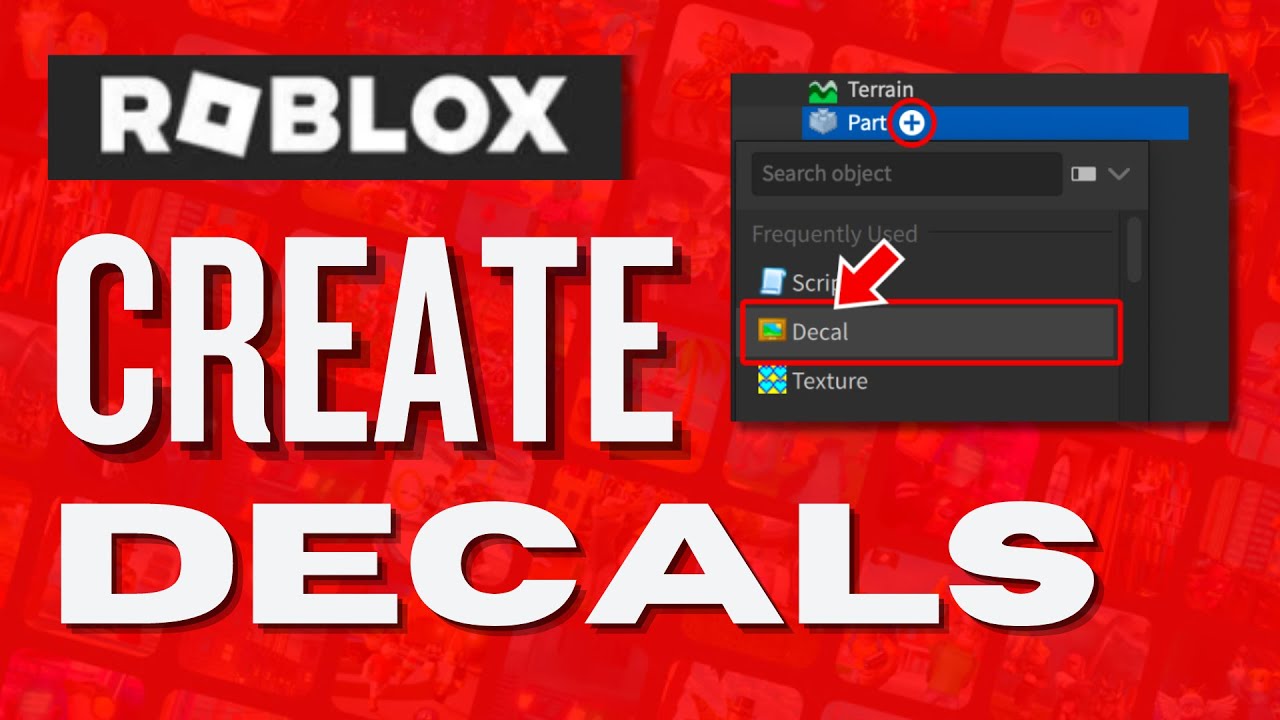


How To Make A Decal On Roblox Roblox Create Decals YouTube . How To Make Decals In Roblox YouTube . How To Create A Decal In Roblox . How To Make Decals In Roblox Full Guide YouTube . How To Make Decals In Roblox Full Guide YouTube


How To Make Decals In Roblox Full Guide YouTube . How To Make Decals In Roblox YouTube . How To Make Decals In Roblox YouTube . How To Create Decals In Roblox YouTube . Roblox Create Decal Link H Ng D N Chi Ti T T O V Qu N L Decal


Word Decals Roblox . 75 Roblox Image Decal IDs WITH IMAGES March 4 2026 . How To Make Roblox Decals Roblox Tutorial Tutorials YouTube Oar2 . How To Make Decals On Roblox 2025 IOS ONLY IPhone Wired 1745077203 . How To Make Decals In Roblox Mobile 2024 YouTube




CREATE DECAL ROBLOX . Best 13 HOW TO MAKE DECALS ON ROBLOX Artofit . Roblox Laundry Decals Images Photos Mungfali How To Create Roblox Decals 1 . Roblox DBZ Decals What Are They For 2026 SL1500 . How To Make Decals In Roblox 2024 Full Guide YouTube


How To Make Decals In Roblox 2024 Guide YouTube . How To EASILY Make ROBLOX DECALS For FREE 2022 Tutorial Kosii . Roblox Laundry Decals Images Photos Mungfali Roblox Decals Tutorial 1 . How To Create A Decal In Roblox 2020 Roblox Tutorial YouTube . 70 Best Decal IDs In Roblox Working Image IDs Beebom Best Decal IDs In Roblox



Best Decal IDs In Roblox Working Tested And Updated Best Decal Ids Roblox . Roblox 2026 Logo REVEALED New Color New Look YouTube Maxres2 . Decals Not Loading Roblox At Diane Rearick Blog . What Will Roblox Look Like In 2026 Blog Graphics 26 . Definitive Guide To Roblox 2026 TM 07169 AU 19 60 Football Heaven TM 07169 Definitive Guide To Roblox 2026


How To Find A Decal ID In Roblox Playbite How To Find Decal Id Roblox . How To Make Decals In Roblox Step By Step Guide YouTube . Roblox DBZ Decals What Are They For 2026 . How To Make Decals Public At Joyce Sargent Blog . How To Use Decals In Roblox Screenshot 62 615x320